How to Measure Custom Hangers for Shirts, Coats and Dresses
A custom hanger should match the garment instead of forcing the garment to adapt. Width, shoulder angle, thickness and hook height all influence fit, balance and rail spacing.
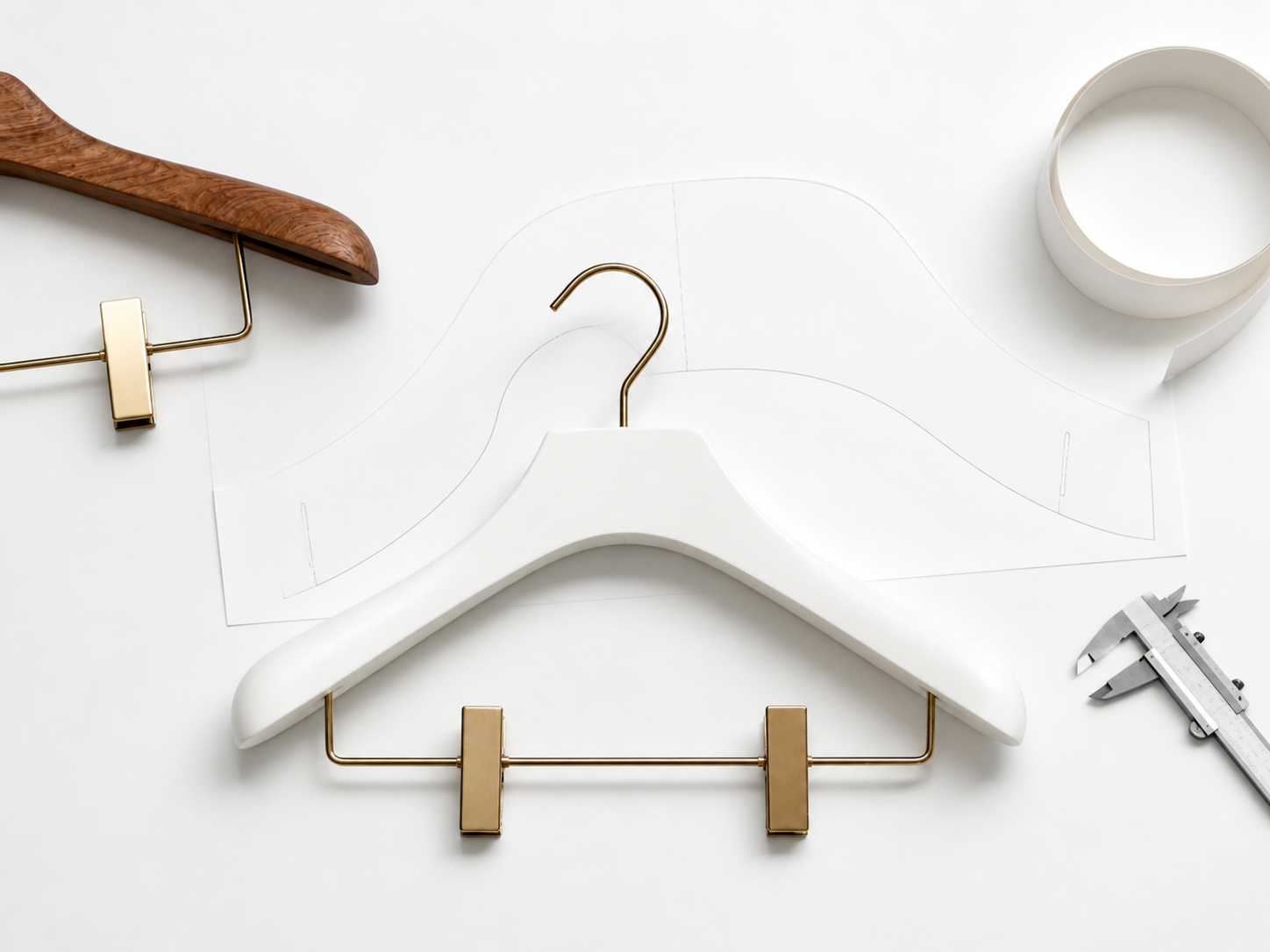
Getting the size right is the single most important decision in a custom hanger program. A beautiful finish or logo cannot rescue a hanger that pushes out a jacket’s sleeve head or lets a silk blouse slide to the floor. This guide explains the measurements that matter, gives common starting ranges for different garments, and shows how to turn those numbers into a sample brief.
1. Measure shoulder width first
Shoulder width is the distance between the two outer tips of the hanger. For jackets and coats, the hanger should support the shoulder seam without extending past it. A hanger that is too narrow lets the fabric collapse and creates dents in the shoulder; one that is too wide pushes the sleeve head out of shape and leaves a visible bump.
The simplest method is to lay the garment flat, measure seam to seam across the back of the shoulders, and choose a hanger 1-2 cm narrower than that measurement. Repeat this for the smallest and largest sizes in your range: if the difference is large, a two-size hanger program may present better than one compromise size.
2. Common hanger sizes by garment type
The ranges below are typical starting points used across retail and hospitality. They are a guide for your brief, not a fixed standard; your final size should always be confirmed with samples on your own garments.
| Garment | Typical width | Shoulder profile | Notes |
|---|---|---|---|
| Men’s suits & blazers | 44-46 cm (17-18 in) | Broad, contoured | Wide shoulder ends support pads; often paired with a trouser bar. |
| Men’s overcoats | 45-48 cm (17.5-19 in) | Extra-wide, 4-6 cm deep | Heavier garments need stronger wood and hooks. |
| Men’s shirts | 43-45 cm (17-17.5 in) | Slim to medium | Slimmer profiles keep rail density efficient. |
| Women’s jackets & coats | 40-43 cm (15.5-17 in) | Contoured, medium-wide | Choose wide-shoulder styles for structured outerwear. |
| Women’s blouses, dresses & knits | 38-42 cm (15-16.5 in) | Slim | Notches or anti-slip finish help with straps and wide necks. |
| Skirts & trousers | 30-36 cm (12-14 in) | Straight bar with clips | Clip pressure matters more than width. |
| Children’s wear | 25-33 cm (10-13 in) | Slim, compact | Size by age band; small hooks keep the look proportional. |
Ranges are general industry references for planning purposes. Confirm final dimensions with physical samples.
3. Check shoulder slope and thickness
The shoulder curve matters as much as the total width. A flat hanger with the right width can still crease a jacket if the angle does not follow the natural slope of the shoulders. Structured garments usually need a fuller, rounded shoulder end, while shirts and dresses can use slimmer profiles that keep rail density efficient.
Thickness also changes how many pieces fit on a rail. A broad contoured suit hanger may take up twice the space of a flat shirt hanger, so retailers with tight floor space often mix profiles: contoured hangers on hero pieces at the front, slimmer versions deeper in the rail.
- Tailoring and outerwear: contoured body with broad shoulder ends, such as a walnut men’s suit hanger.
- Soft coats and knitwear: wide but gently rounded shoulders, such as a wide-shoulder women’s hanger.
- Shirts, blouses and dresses: slim flat profiles with notches or an anti-slip surface.
4. Do not ignore hook height
Hook height is the distance from the top of the hanger body to the top of the hook. It affects how garments align on display: when hooks differ, collars sit at different heights and the rail looks uneven. In multi-style collections, a consistent hook height creates a cleaner line and helps visual merchandisers arrange products faster.
Also check the hook’s inside diameter against your rails. A hook that is too tight will not slide smoothly; one that is too open can tip off a thin rail. If you use a mix of rail systems (shop floor, stockroom, hotel wardrobe), measure each before finalising the hook.
5. Plan bottoms and accessories separately
Trousers and skirts rarely share the same hanger as tops. Decide early whether bottoms will hang on a trouser bar under the jacket, on a separate clip hanger, or folded. If you want full outfits on one hanger, the bar position must leave enough drop for the trouser to hang without touching the jacket hem. Our guide to anti-slip surfaces, clips and trouser bars covers these details.
6. Build a simple measurement brief
Before requesting samples, collect the following for each garment category in your range:
- Shoulder seam-to-seam width for the smallest and largest size.
- Garment weight and fabric type (tailoring, knit, silk, outerwear).
- Neck opening width for tops and dresses.
- Preferred hook finish and rail type in store.
- Whether you need a trouser bar, clips or notches.
- Reference photos of how the garment should look on the rail.
With this information, a manufacturer can propose a shape and size for each category instead of guessing. You can also explore finish and logo options on our customization page.
7. Use samples before production
A measurement sheet is only the first step. Test samples with real garments, check the front view and the side profile, and look at the hanger on the actual rail under store lighting. Approve the size only after the garment hangs naturally, with no dents at the shoulder, no stretching at the neck and no sliding when the rail is moved.
Frequently asked questions
What is the standard width of a men’s suit hanger?
Most men’s suit and jacket hangers fall between about 44 and 46 cm (17-18 in) from shoulder tip to shoulder tip. The right width depends on the garment’s shoulder measurement, so it is best confirmed with a sample on a real jacket.
What size hanger do women’s garments need?
Women’s blouse, dress and knitwear hangers are usually narrower, commonly around 38-42 cm (15-16.5 in). Wide-necked tops and delicate knits often benefit from a slimmer profile so the shoulders do not stretch.
How thick should a coat hanger be?
Coats and structured jackets need a broader shoulder end, often 4-6 cm deep, to support the shoulder pad and keep the sleeve head from denting. Shirts and dresses can use thinner profiles to save rail space.
Should every hanger in a store be the same size?
Not necessarily. Many brands use a small family of sizes (for example men’s tailoring, women’s tops, bottoms and kidswear) while keeping the same finish, hook and logo so the rail still looks consistent.
How do I confirm the right custom hanger size?
Send garment measurements or reference photos with your quote request, then review physical samples with real garments before approving production.
Need help choosing hanger sizes?
Share your garment measurements and the look you want on the rail. We will recommend shapes and sizes for each category and prepare samples for review.
Request a QuoteView Products