
Velvet vs Wooden vs Acrylic Hangers: Which Is Best for Retail?
Compare grip, space, garment support and visual effect to choose the right hanger material for your store, showroom or wardrobe.
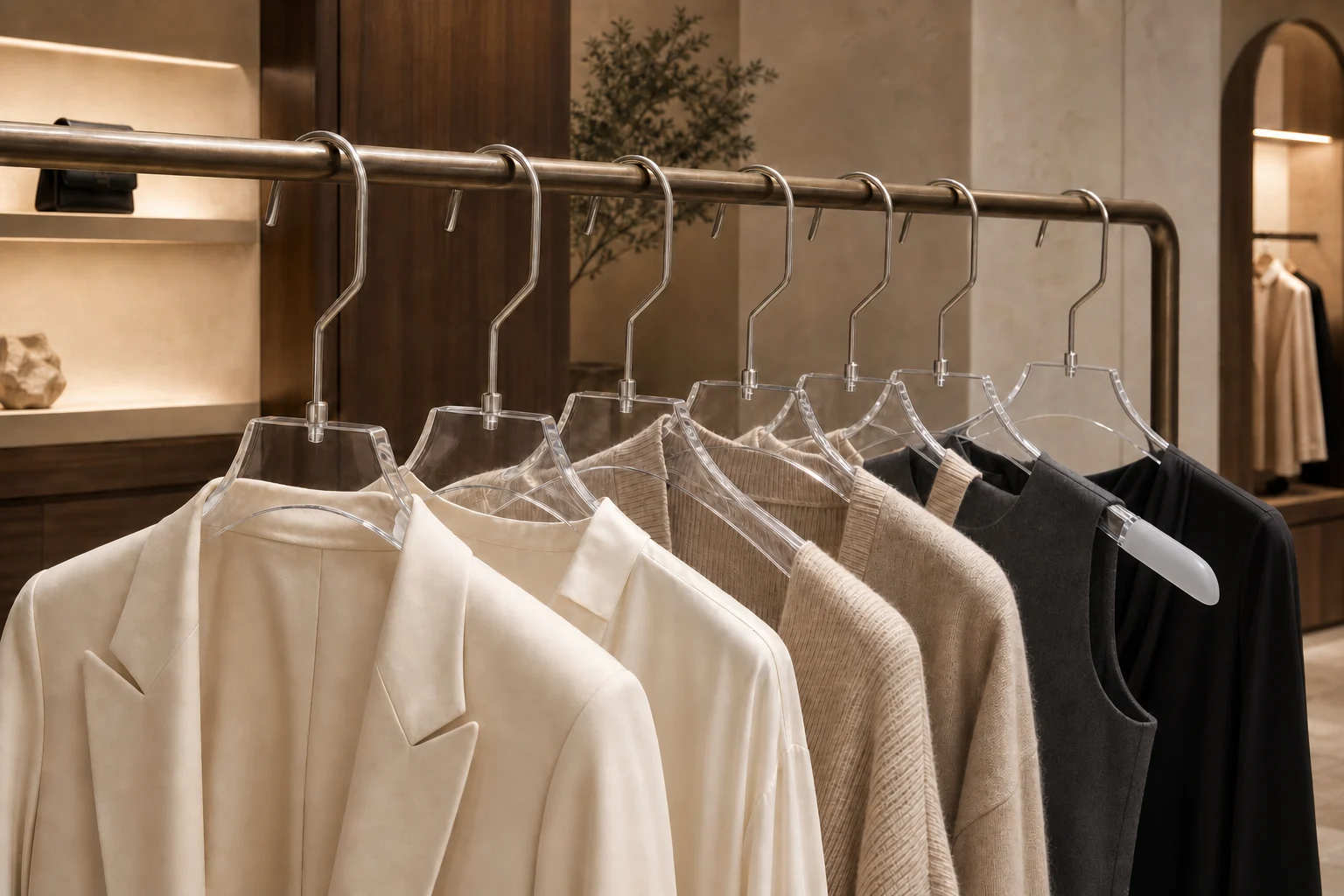
Velvet, wood and acrylic are the three hanger materials most often chosen for premium retail, showrooms and personal wardrobes. Each one changes how a rail looks, how much fits on it and how garments behave. This guide compares the three so you can match the hanger to your garments and your store.
Quick comparison
| Velvet (flocked) | Wooden | Clear acrylic | |
|---|---|---|---|
| Look | Soft, matte, uniform | Warm, natural or richly painted | Modern, almost invisible |
| Grip | Very high | Low to medium (higher with anti-slip details) | Low unless notched or coated |
| Space on rail | Slimmest | Widest, especially contoured shapes | Medium |
| Garment support | Good for light garments | Excellent for tailoring and coats | Good for light to medium garments |
| Feel in hand | Soft and light | Solid and substantial | Smooth and glassy |
| Branding | Printing, stamping | Engraving, printing, foil, metal plaques | Printing, foil stamping |
| Best for | Dresses, knits, silk, dense rails | Tailoring, coats, luxury menswear, hotels | Minimalist stores, showrooms, statement pieces |
Velvet (flocked) hangers
Flocked hangers are covered in a fine velvet-like fibre that grips fabric. Silk blouses, satin dresses and wide-necked knits stay put, even when customers browse quickly. Because they are usually slim, more garments fit on each rail, which helps stores with limited floor space.
The trade-offs are structure and longevity. Very slim velvet hangers do not support heavy coats or tailored jackets as well as contoured wood, and the flocked surface can show wear on high-traffic rails. A good middle ground is flocking applied to a wooden body, such as our ivory flocked beech hanger, which combines grip with a firmer form.
Wooden hangers
Wood is the classic choice for premium presentation. Its weight and contoured shoulders hold the shape of jackets, coats and shirts, and the material accepts a wide range of finishes, from natural walnut grain to matte black paint. Wood also offers the widest choice of logo methods, including laser engraving and metal plaques.
Wooden hangers take more rail space than velvet, so many stores use them for hero pieces and tailoring at the front of the rail. Examples include the North American walnut men’s hanger and the matte white wide-shoulder women’s hanger. To improve grip, wood can be combined with anti-slip strips, notches or fabric wrapping; see our anti-slip details guide.
Clear acrylic hangers
Clear acrylic gives a weightless, gallery-like effect: the hanger almost disappears and the garment becomes the focus. It works well in minimalist boutiques, concept stores, bridal salons and window displays where a sculptural, contemporary look is wanted.
Acrylic is smooth, so slippery fabrics may need notches or a coated shoulder. Thickness matters: thicker acrylic looks more premium and supports heavier garments, while thin acrylic can look cheap and flex under weight. Polished edges and a well-matched hook finish make a big difference to perceived quality.
How to choose for your store
- Start with garments. Tailoring and coats point to wood; delicate dresses and knits to velvet or flocked wood; statement pieces to acrylic.
- Consider rail space. Dense rails benefit from slim velvet; spacious boutiques can use contoured wood.
- Match the interior. Warm timber interiors suit wood; white, concrete or glass interiors suit acrylic, matte white or matte black.
- Keep the system consistent. If you mix materials, unify colour, hook finish and logo placement.
- Test samples on real garments under store lighting before committing.
Hanger size also affects the result, so read our hanger size guide, and explore material and finish options on the customization page.
Frequently asked questions
Are velvet hangers better than wooden hangers?
They solve different problems. Velvet (flocked) hangers are slim and grippy, so they save space and stop slippery garments falling. Wooden hangers are stronger and more structured, which suits tailoring, coats and premium presentation.
Are acrylic hangers good for clothing stores?
Clear acrylic hangers suit minimalist and contemporary stores because they almost disappear on the rail and let the garment take focus. They are less suited to very heavy coats unless the design is reinforced.
Which hangers save the most space?
Slim velvet hangers usually save the most rail space. Wooden hangers with contoured shoulders take more space but give better shape support for structured garments.
Can I mix hanger materials in one store?
Yes, but keep a consistent colour, hook finish and logo. For example, wooden suit hangers for tailoring and slim flocked hangers for knits and dresses in the same tone.
Can velvet or acrylic hangers have a logo?
Yes. Acrylic is usually printed or foil stamped, while flocked hangers can carry printed or stamped logos. Wooden hangers add options such as laser engraving and metal plaques.
Not sure which material fits your rails?
Tell us about your garments and store interior. We will suggest materials and finishes to sample side by side.
Request a QuoteView Products