
Wood or Plastic: Which Hanger Fits Your Brand?
Choosing between wood and plastic is not only a cost decision. It affects garment support, retail atmosphere, sustainability perception and how customers read the value of a collection.
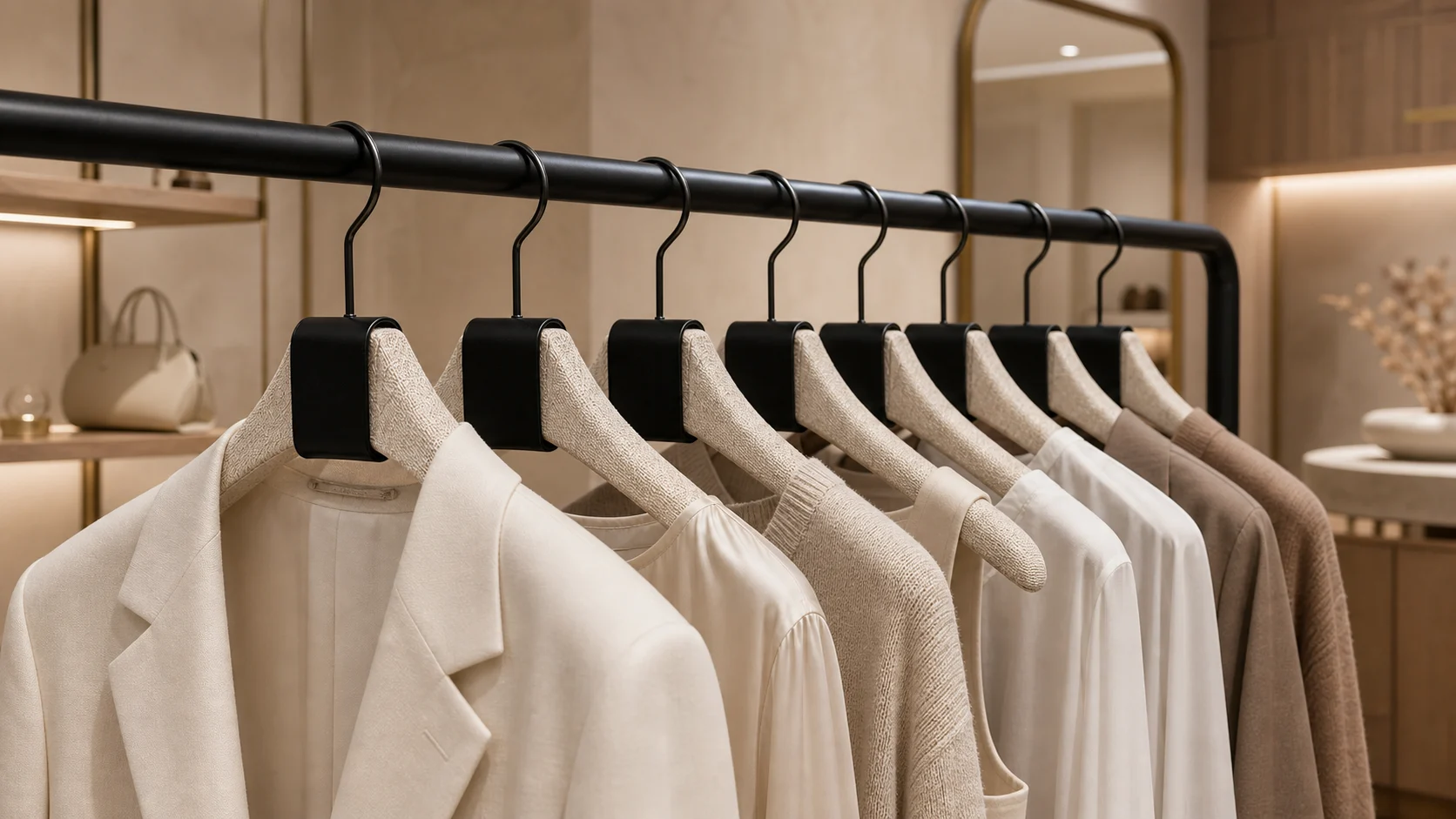
The hanger is one of the few brand touchpoints a customer handles before they ever try on a garment. Choosing between wood and plastic is therefore not only a cost decision: it affects how the collection looks on the rail, how well garments keep their shape, and how the store or wardrobe feels. This guide compares the two materials and explains when each one makes sense.
Why material changes presentation
A solid wooden hanger carries visual weight. It helps tailored jackets, coats and premium shirts feel structured on the rail, and its grain or painted finish adds a layer of craftsmanship to the display. Plastic hangers can be useful for high-volume programs, lighter garments and budget-sensitive rollouts, but they rarely create the same boutique impression unless their thickness, colour and surface are specified carefully.
Wood vs plastic at a glance
| Factor | Wooden hangers | Plastic hangers |
|---|---|---|
| Look & feel | Premium, warm, natural grain or rich painted finish | Clean and uniform; quality depends heavily on thickness and finish |
| Garment support | Strong; contoured shapes support tailoring and coats | Good for light garments; heavy coats need reinforced designs |
| Weight | Heavier, feels substantial in hand | Lightweight, easier for shipping and stockrooms |
| Branding options | Laser engraving, printing, foil stamping, metal plaques | Printing, hot stamping, moulded logos |
| Finish options | Natural, clear lacquer, stained, matte or gloss paint, flocked, fabric-wrapped | Solid colours, frosted, clear or tinted |
| Durability | Long service life with proper finishing | Varies; thin plastic can crack or warp |
| Unit cost | Higher | Lower, especially at large volumes |
| Best for | Luxury retail, tailoring, showrooms, hotels, premium wardrobes | High-volume retail, logistics, temporary or seasonal programs |
When wood is the better choice
Choose wood when the hanger is part of the selling environment: luxury retail, hotel wardrobes, showrooms, tailoring services and brand launch displays. Wood also gives more room for stained finishes, painted colours, tactile coatings and engraved logo details. Different woods create different moods:
- Walnut gives a deep, natural brown that suits menswear and heritage brands, as in our North American walnut men’s hanger.
- Beech has a fine, even grain that takes paint well, which makes it ideal for matte black or matte white finishes.
- Ash shows a more pronounced grain under clear lacquer, for a light Scandinavian look.
- Fabric-wrapped or flocked wood adds grip and softness for delicate garments, as in our fabric-wrapped men’s wood hanger.
When plastic still makes sense
Plastic can work well for temporary campaigns, logistics-heavy programs and stores that need lighter units at scale. Garment-to-hanger programs, where clothing ships from the factory already on hangers, often rely on plastic to save weight and cost. The key is to match thickness, colour and surface quality carefully so the hanger still feels intentional rather than disposable.
Clear acrylic and resin sit between the two: they look premium and modern, and can be a good option for minimalist stores or for heavy outerwear such as fur coats when a strong, sculptural shape is needed.
Think about the whole program, not one hanger
Many brands combine materials. A flagship might use walnut or painted beech on the shop floor, while the stockroom and e-commerce warehouse use plastic. What matters is that the hangers customers see are consistent in colour, hook finish and logo placement. A small family of shapes in one material usually looks more considered than many unrelated styles.
How to specify your brief
Start with garment category, target price per unit, store environment and the brand feeling you want to create. Then:
- List each garment category and the hanger shape it needs (see our hanger size guide).
- Choose the material and finish for customer-facing areas.
- Pick hook finishes and a logo method that match the store’s hardware (see logo method comparison).
- Compare sample sets side by side under real lighting before approving.
A good hanger material should support the garment and reinforce the brand before the customer reads a label. You can explore materials, hook finishes and logo options on our customization page.
Frequently asked questions
Are wooden hangers better than plastic hangers?
For premium presentation, yes in most cases. Wood offers weight, structure and a quality handfeel, and it accepts stains, paints, engraving and metal hardware. Plastic is lighter and usually cheaper per unit, which suits high-volume or short-term programs.
Which wood is used for custom hangers?
Common choices include beech, ash, schima, rubberwood, pine and walnut. Beech and ash are popular for their strength and fine grain; walnut is chosen for a dark, luxurious natural colour.
Can plastic hangers carry a logo?
Yes. Plastic and acrylic hangers are usually branded with printing or hot stamping, while wood is commonly laser engraved, printed, foil stamped or fitted with a metal plaque.
Do wooden hangers suit hotels?
Wooden hangers are a common choice for hotel wardrobes because they feel premium and are durable. Many hotel programs also specify anti-theft hooks or ring-top hooks.
How do I choose between wood and plastic for my brand?
Start from garment category, store environment, budget per unit and brand positioning, then compare physical samples side by side under real store lighting.
Compare wood finishes for your brand
Tell us about your garments and store environment, and we will suggest materials and finishes to sample side by side.
Request a QuoteView Products